The Project
HPV-FASTER-Implement aims to improve cervical cancer (CC) prevention and address health disparities. The highest protection is afforded by HPV vaccination and by HPV screening, but there has been insufficient outreach to populations in vulnerable positions.
This is due to issues of inaccessibility and underutilisation among vulnerabilised populations, thereby exacerbating inequalities within the European healthcare system. This underscores the need for tailored, innovative strategies to address this issue.
The HPV-FASTER-Implement project will develop a Europe-wide knowledge framework and tools to monitor the evolving needs of at-risk populations. By collaborating with stakeholders, the project will implement combined HPV vaccination and screening interventions, health education campaigns, and data-driven policy recommendations to advance progress toward the elimination of cervical cancer.
The project focuses on populations who are often excluded from standard prevention programmes. The pilot countries are France, Romania, Spain, Sweden and Denmark, and they cover several vulnerabilised groups, including:
- women, trans and non-binary people with a cervix,
- sex workers,
- women living with HIV,
- migrant communities,
- people experiencing poverty or social exclusion,
- people with drug or alcohol use disorder,
- women in detention.
The project has three main pillars:
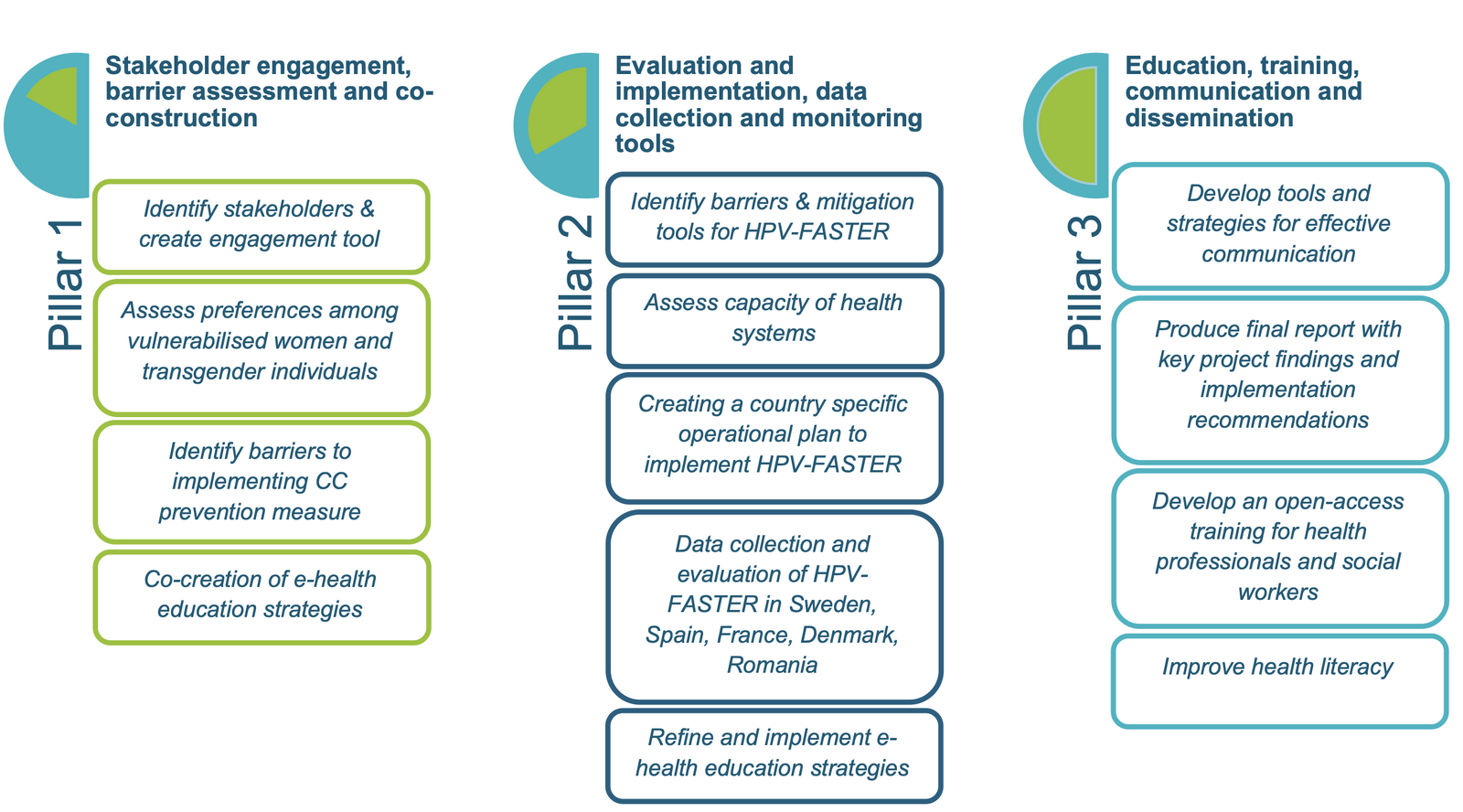
The project is funded by the European Commission (Grant Agreement No 101155975) and runs through 2029, with the goal of building a more inclusive and effective prevention framework.
Watch here a short video on what HPV-FASTER-Implement is about.
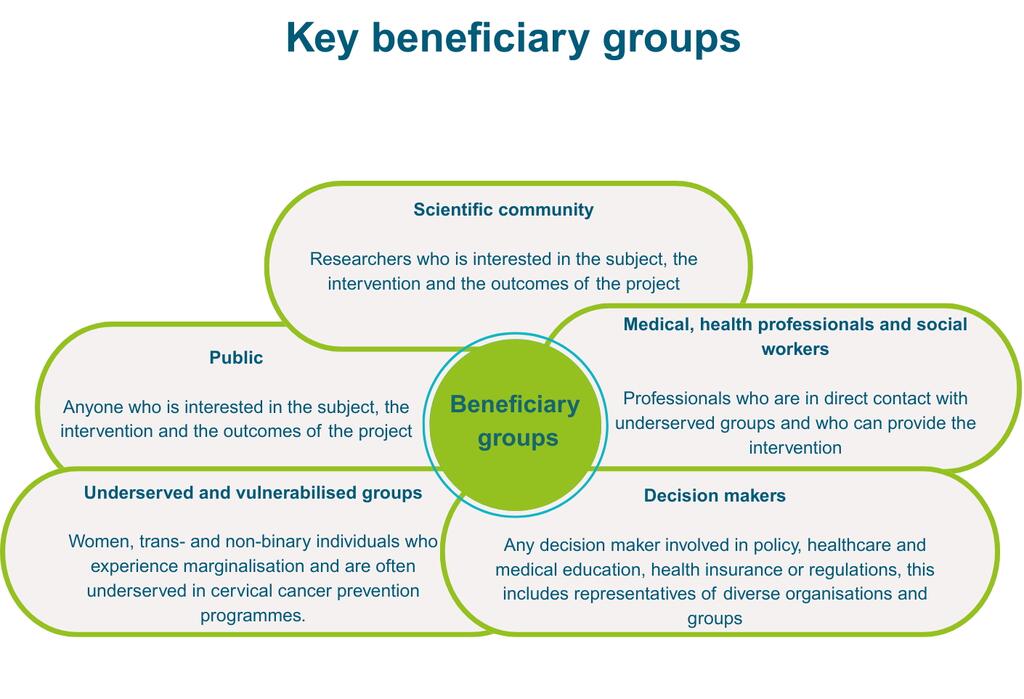
HPV-FASTER-Implement focuses on a range of beneficiary groups, such as the general public, underserved and vulnerabilised groups, the scientific communities, medical, healthcare and social workers and decision makers.